
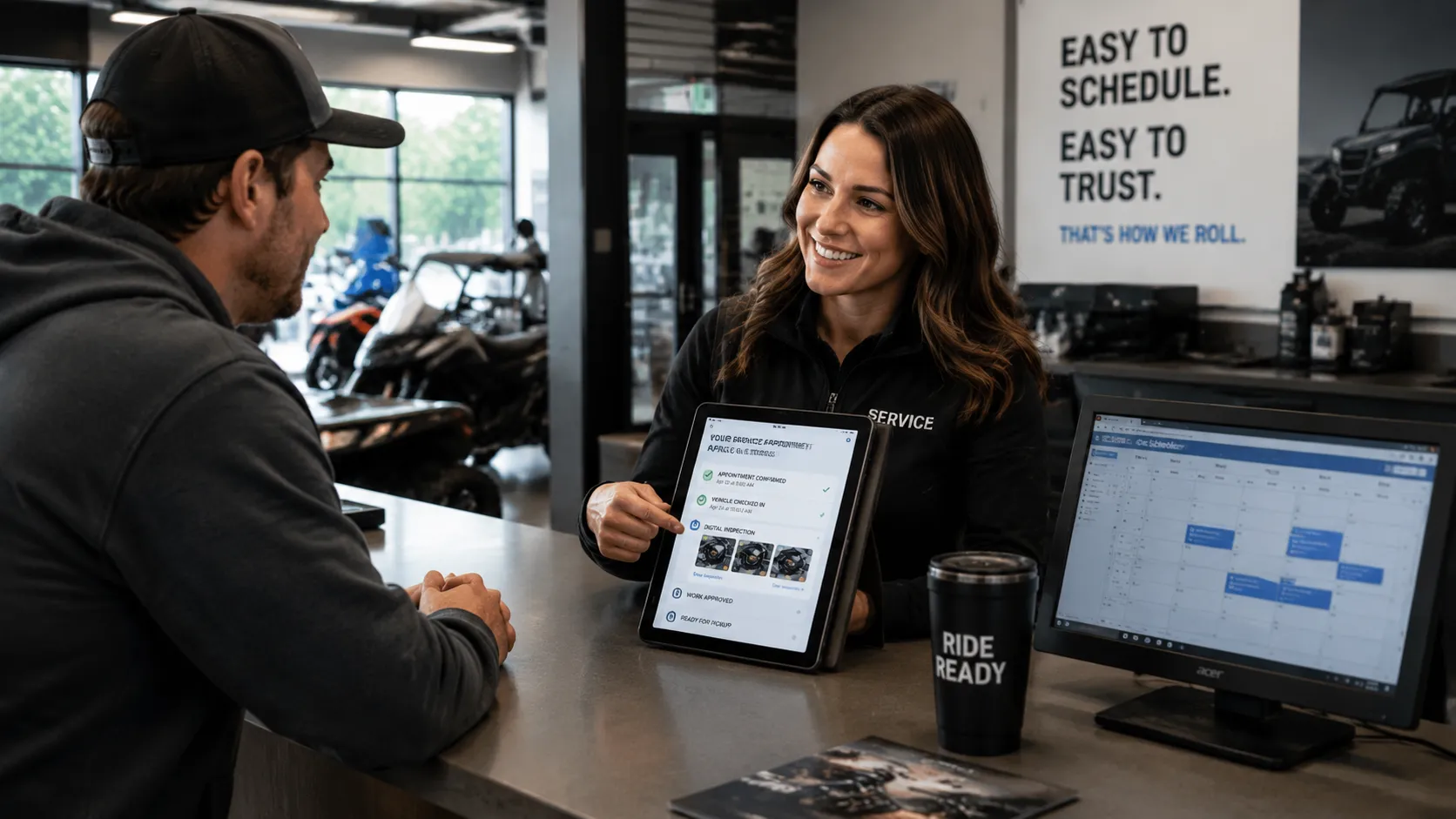
If you scroll through your own phone, you’ll see it: you book haircuts, vet visits, oil changes and even order coffee without ever dialing a number or speaking a word. Your customers expect the same from your service department. If your riders have to sit on hold, leave a voicemail, and hope someone calls back, you’re already behind. The dealerships that win fixed‑ops loyalty are the ones that make service feel as easy as everything else in a rider’s digital life.
A modern service experience starts before the unit ever hits your lot. Online scheduling turns your website into a 24/7 service advisor. (Don't read this as "replace your service advisors!") Riders can choose the job, pick a time, and tell you what they’re dropping off without waiting for an answer at the counter. It also lets you control capacity with job templates (Examples: “200‑mile First service for side‑by‑sides,” “PWC winterization”) so your calendar reflects real bay time instead of guesswork.
Good News: Your DMS Is Probably Ready!
Most leading powersports DMS platforms already have the guts of a modern service experience built in. Lightspeed gives you a visual Service Scheduler, standard jobs, mobile photo capture, tech video, and texting tools to keep riders in the loop. DX1 combines its DMS with a website platform and Service Scheduling, so managers can set tech availability, drag‑and‑drop jobs on the calendar, add photos to ROs, and send appointment notifications from one place.
If you’re on a system like Lightspeed, DX1, or another powersports‑focused DMS, offering online booking and real‑time updates usually isn’t a ground‑up project, it’s a matter of turning on features you already pay for and making sure your website is connected to them.
Once the appointment is on the books, text messaging should become your primary communication channel. Riders read texts, and they respond fast. Using SMS for confirmations, reminders, “unit checked in,” and “ready for pickup” updates cuts down on phone tag and frustrated “just checking on it” calls. It's just the standard these days. With the right setup, a service advisor can send a status update to five customers in less time than one phone call, and the whole thread is documented in one place.
The biggest unlock, though, is digital inspections. Instead of asking a customer to trust a verbal explanation, you show them what your technicians see. A few photos, a quick video, and a simple green/yellow/red checklist make it obvious why that chain needs replacement or those brake pads are a safety issue. When riders can see the condition for themselves on their phone, they’re far more likely to approve the work, and far less likely to question the bill when they pick up. This has been the standard in auto dealerships for years.
Automation ties it all together. You don’t need a giant tech stack to get value here. Start with a few basics: automatic appointment confirmations and reminders by text and email, simple templates for common messages (“We’ve checked in your unit,” “Here’s your inspection,” “Your unit is ready for pickup”), and post‑service follow‑ups that thank the customer, ask for a review, and remind them of the next recommended service.
The goal isn’t to replace people; it’s to free them up. When reminders and status updates run in the background, your advisors have more time for what actually builds loyalty: greeting riders by name, walking the unit with them at check‑in, and explaining recommendations clearly. If your marketing talks about being “easy to do business with” or “ride‑ready in record time,” your digital service journey is where you prove it. Start on your website and end with a clean, ready‑to‑go unit and a text that arrives before the customer has to ask.
.svg)