
You can invest in better software, add new processes, and fine-tune your pricing. But if riders don’t trust your service team, none of that really matters. The real difference in fixed ops comes down to people and the culture they work in.
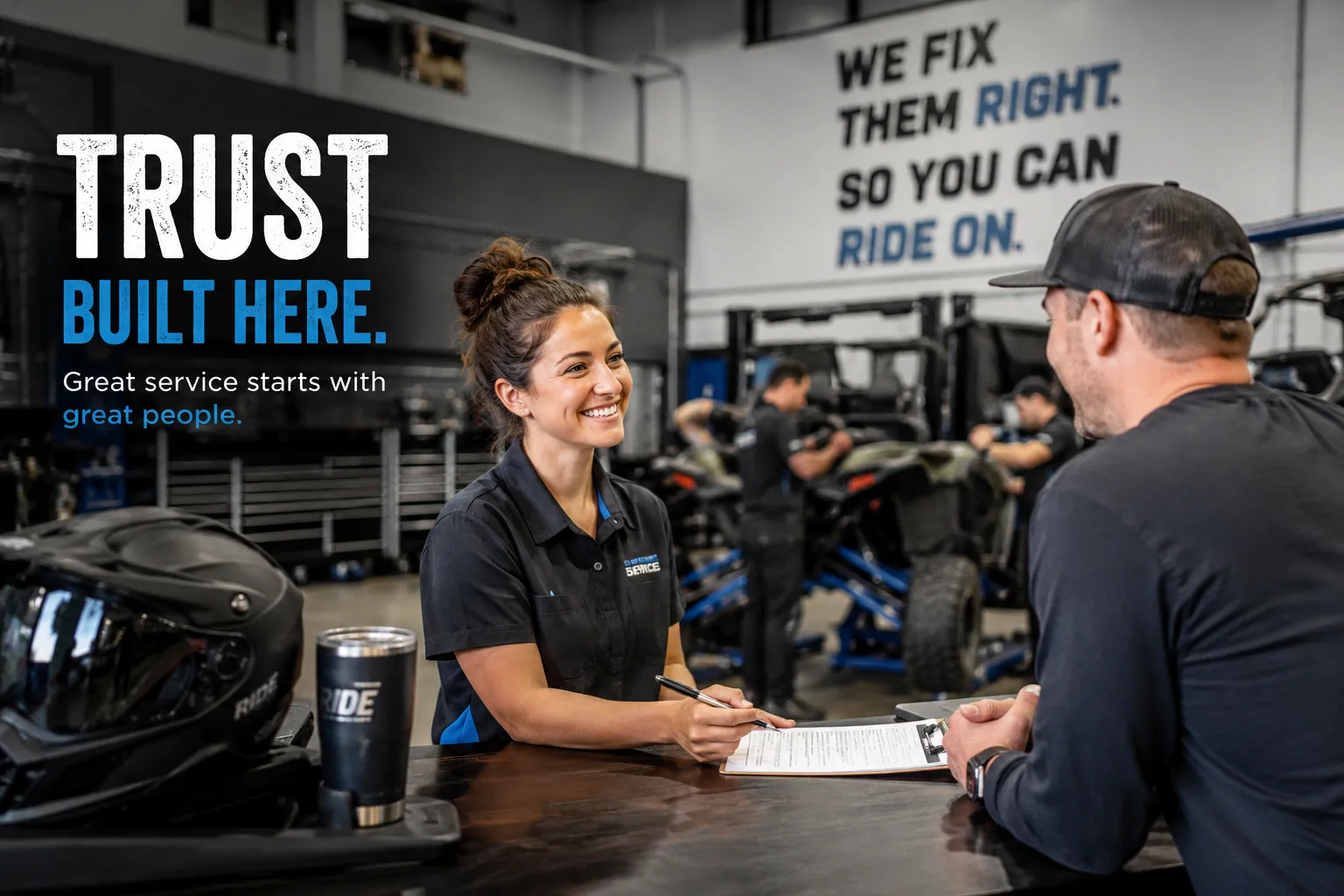
It starts at write-up. The service counter is where riders decide if your dealership understands them. A strong advisor does more than open a repair order. They translate technical issues into plain language, ask a few extra questions about how the unit is actually used, and take a minute to walk around it with the customer. They confirm how and when to communicate, and they set clear expectations around timing and cost. When a rider hands over their keys, they should feel like someone is taking ownership, not just moving their unit into a queue.
Behind the scenes, culture is what keeps those promises from falling apart. The best service teams keep things simple and consistent. Short daily or weekly huddles help everyone stay aligned. What slipped yesterday, what matters today, and which customers need extra attention. Basic scoreboards like cycle time, billed hours, and comeback rate give the team a clear picture of how things are going. The goal is not to pressure people, but to show where things are working and where support is needed. When technicians understand the numbers and see how their work impacts them, they take more pride in fixing problems the right way.
Training and career growth play a bigger role than many dealerships expect. Service writers and techs are dealing with complex repairs, safety concerns, and sometimes frustrated customers, often all at once. Investing in factory training, cross-training, and communication skills makes a real difference. It leads to better diagnostics, clearer conversations, and stronger repair orders. It also helps retain good people. When employees see a path forward, they are less likely to leave for a small pay bump somewhere else.
Recognition is what holds it all together. The small wins matter. The advisor who calms down an upset customer. The technician who catches a safety issue before it becomes a problem. The porter who notices something that prevents damage. When those moments are shared with the team, they define what good looks like. Over time, that shapes a culture where doing the right thing is the norm, not the exception.
At the end of the day, service culture should connect back to why the dealership exists in the first place. Most people in powersports are riders. Every unit in the shop belongs to someone looking forward to their next ride, trip, or weekend. When your team keeps that in mind, the rest tends to fall into place.
.svg)