
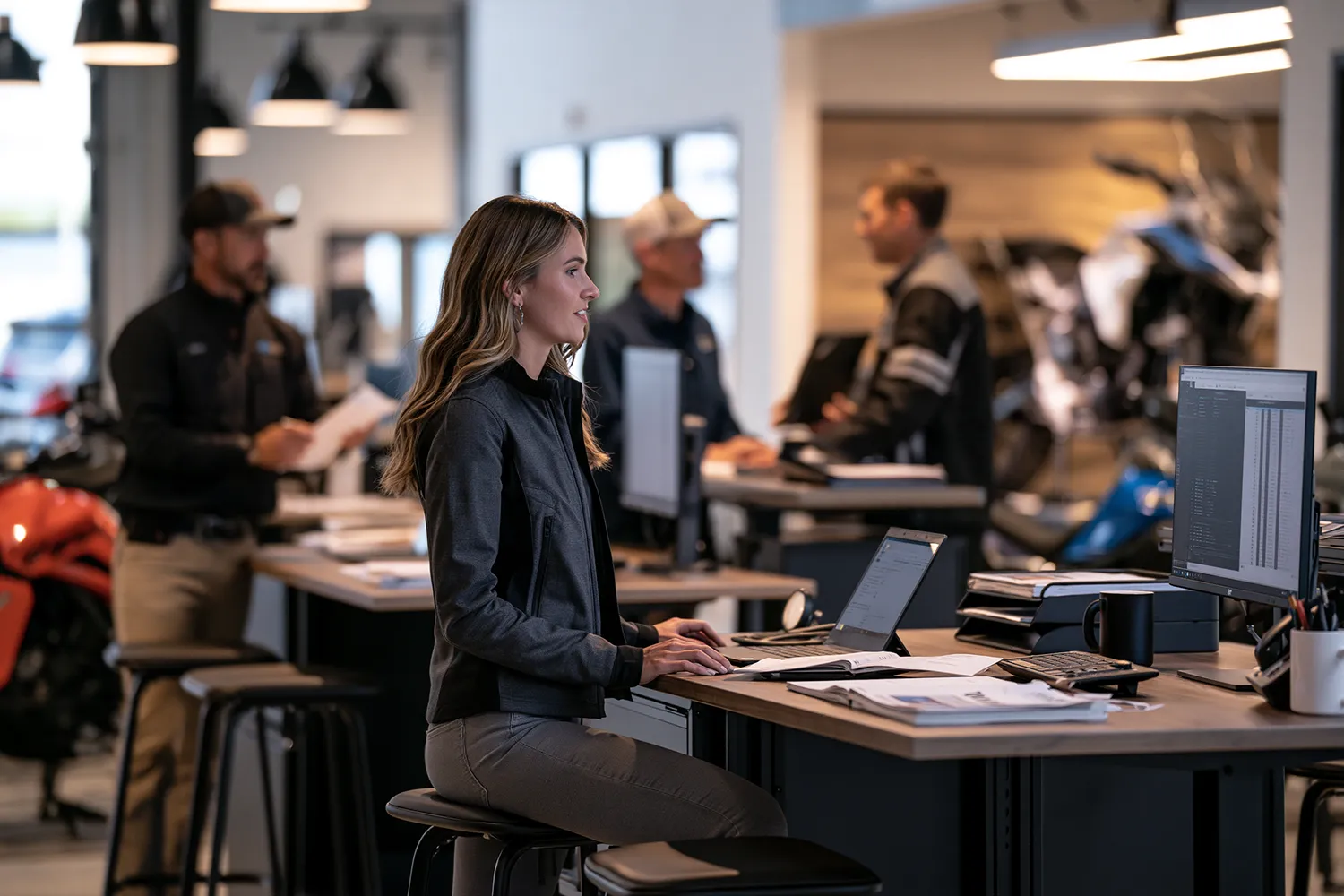
One of the biggest obstacles to an effective powersports sales floor is the salesperson’s office. While offices may feel like a perk or a comfortable place to work, they can unintentionally create a culture of isolation, where sales associates disappear behind closed doors while customers walk the showroom floor unattended. I call these “campgrounds”—places where salespeople settle in, get comfortable, and lose awareness of what is happening around them. In a business where opportunity can walk through the front door at any moment, being out of sight and unavailable is a costly habit.
Throughout my time consulting and training at hundreds of dealerships across the country, I consistently found that the most effective sales teams operated in an open sales environment built around standing-height desks rather than traditional desks with chairs or stools. High-tops encourage sales associates to remain standing, engaged, and visible. They create a natural place to complete paperwork, work deals, make phone calls, or handle follow-up without becoming a place to settle in for hours. When a salesperson is on the phone, they should still be present and aware of the showroom. When a customer walks in, the expectation is simple: our people are on their feet, available, and ready to engage. The showroom should be a place of activity, not a collection of occupied chairs.
The same philosophy applies to the condition and availability of the sales floor. No eating at sales desks, no personal belongings scattered across workstations, and no claiming a desk as personal territory. Every high-top should be clean, organized, and available for any sales associate to use at any time. This reinforces the idea that the floor belongs to the team, not the individual. A shared, clean workspace creates flexibility, accountability, and a more professional atmosphere while eliminating the distractions and clutter that contribute to “campgrounds”.
Ultimately, this is about more than furniture. It is about establishing a culture of availability, urgency, and customer awareness. A customer should never have to wonder who is working, who is available, or whether they are interrupting someone. Our sales team should be visible, approachable, and actively engaged in the environment around them. Removing offices, eliminating chairs and stools from the sales floor, and keeping shared high-tops open are simple operational decisions that reinforce a much bigger expectation: when customers are on the floor, our sales team should be on the floor with them.
